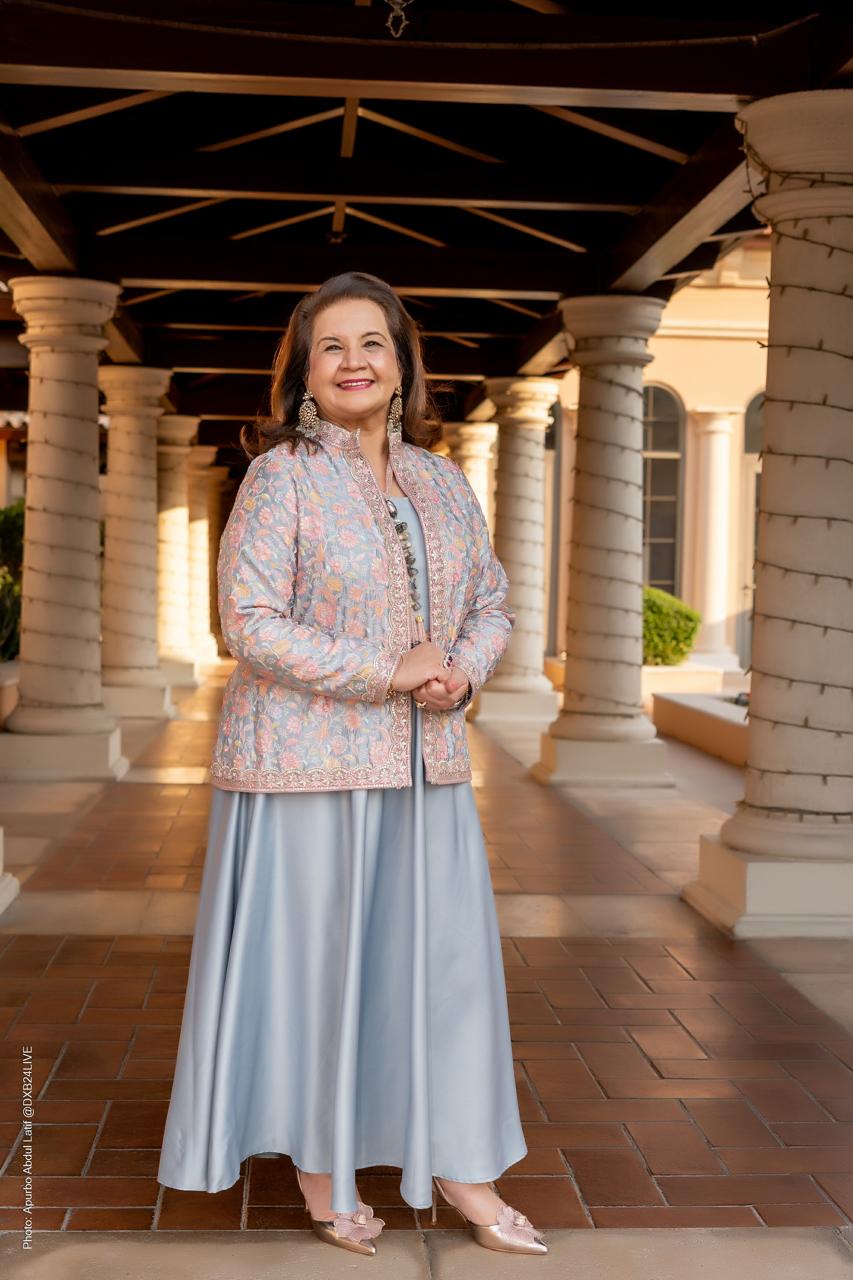









In an era defined by geopolitical uncertainty, rapid economic diversification, and unprecedented organizational transformation, few leaders have emerged with the clarity, composure, and strategic foresight of Nisha Sanghani, the distinguished head of Ashurst’s Risk Advisory practice in the Middle East. Her career stands as a testament to disciplined leadership, intellectual rigor, and an unwavering commitment to elevating governance as a driver of performance rather than a mere compliance exercise.
Today, Sanghani is regarded as one of the region’s foremost advisors to boards and C‑suite executives, guiding organizations through their most critical inflection points. Her work spans transformation, regulatory pressure, governance redesign, and strategic decision‑making—areas where the stakes are high and the margin for error is narrow. Yet she approaches each challenge with a rare blend of technical mastery and human insight, qualities that have positioned her as a trusted voice among the region’s most influential leaders.
A Strategic Leader Drawn to a Region of Ambition
Sanghani’s decision to establish and lead Ashurst’s Risk Advisory practice in the Middle East was driven by more than professional opportunity; it was inspired by the region’s extraordinary ambition and clarity of purpose. She speaks of the Middle East not as a passive participant in global change, but as a region actively shaping its future.
“This is a region investing heavily in growth, innovation, and economic diversification,” she notes. “The opportunity to be entrepreneurial and act as a strategic advisor in this market was incredibly compelling.”
Her role today is multifaceted. She advises boards on governance and risk, builds and scales the regional practice, and convenes senior leaders to engage in candid dialogue about the forces shaping business performance. It is a role that demands intellectual agility, cultural fluency, and the ability to translate complex issues into actionable strategy—qualities she embodies with precision.
Transforming Governance Into a Commercial Advantage
One of Sanghani’s most significant contributions to the corporate landscape is her ability to reposition governance from a compliance obligation to a strategic enabler. She challenges the misconception that governance is restrictive, instead demonstrating how it can accelerate decision‑making, strengthen resilience, and unlock commercial value.
“When done well, governance is a commercial enabler,” she asserts. Her approach focuses on making governance practical and decision‑oriented—ensuring boards have the right information, clear accountability, and visibility over risk. Whether redesigning operating models or embedding governance into transformation programs, her work consistently elevates governance to a performance‑driven discipline.
This shift—from governance as control to governance as capability—is one of the defining hallmarks of her leadership.
Navigating the Complexities of a Rapidly Scaling Region
Middle Eastern organizations face unique governance challenges, shaped by rapid expansion across jurisdictions, evolving regulatory environments, and diverse ownership structures. Sanghani understands these complexities intimately.
She observes that many organizations are transitioning from foundational governance to more mature, integrated models that align strategy, risk, technology, and culture. This evolution requires not only technical frameworks but also leadership maturity—an area where she plays a pivotal advisory role.
Her ability to balance global best practice with regional context has made her an indispensable partner to organizations seeking to strengthen governance without compromising cultural identity or leadership style.
Defining the Modern, Risk‑Intelligent Leader
Sanghani’s work with boards and C‑suite executives has given her a unique vantage point into the qualities that define modern leadership. She describes today’s most effective leaders as “risk‑intelligent”—individuals who do not fear risk but understand how to navigate it with discipline and foresight.
“They don’t predict—they prepare,” she explains. These leaders possess a deep understanding of geopolitics, regulation, and technology, and they translate that understanding into strategic choices. They are decisive even with imperfect information, grounding their decisions in strong governance and reliable data.
Equally essential, she notes, is communication. In uncertain environments, clarity and consistency are not optional—they are the foundation of trust.
Embedding Accountability Through Culture
Sanghani is acutely aware that governance frameworks alone cannot transform organizations; culture must reinforce them. She emphasizes that culture cannot be mandated—it must be designed, enacted, and sustained.
Her work often involves aligning incentives, decision‑making processes, and performance frameworks with the behaviors leadership wants to cultivate. She places particular emphasis on leadership tone: what is prioritized, what is challenged, and what is rewarded.
“When leadership tone is consistent, accountability and transparency follow,” she says. It is a philosophy that has guided her work across sectors and geographies, enabling organizations to embed governance not just in systems, but in mindsets.
Inspired by Leaders of Purpose and Humility
Throughout her career, Sanghani has been influenced by leaders who combine technical excellence with humility and clarity of purpose. She also draws profound inspiration from the leadership model of the UAE, which she describes as a powerful blend of long‑term vision, consistency, determination, and stability.
This admiration is reflected in her own leadership style—measured, purposeful, and anchored in service to long‑term organizational success.
Guidance for Today’s Corporate Leaders
Sanghani’s advice to executives is both pragmatic and profound. She emphasizes that organizations are defined not by incremental change, but by how they respond to critical moments. Clarity of strategy, strong governance, and aligned leadership are essential.
She also urges leaders to stop treating governance, risk, and technology as separate conversations. The organizations that will thrive, she argues, are those that integrate these elements into a unified strategic framework.
The Essence of Great Leadership
When asked what makes a great leader, Sanghani distills it into three qualities: clarity, consistency, and courage.
Clarity provides direction.
Consistency builds trust.
Courage enables difficult decisions in uncertain environments.
She also underscores the inseparable link between performance and culture. “The best outcomes come when both are managed deliberately,” she says—a principle she has demonstrated throughout her career. Connect with Nisha on LinkedIn here.
A Leader Shaping the Future of Governance
Nisha Sanghani’s journey is one of disciplined ambition, intellectual depth, and unwavering commitment to elevating leadership standards across the Middle East. Her work continues to influence how organizations think about governance, risk, and transformation—shifting them from reactive functions to strategic capabilities.
In a region defined by bold vision and rapid evolution, Sanghani stands as a leader whose impact is both immediate and enduring. Her voice, her expertise, and her leadership continue to shape not only the organizations she advises, but the broader narrative of what modern governance and leadership should aspire to be.