








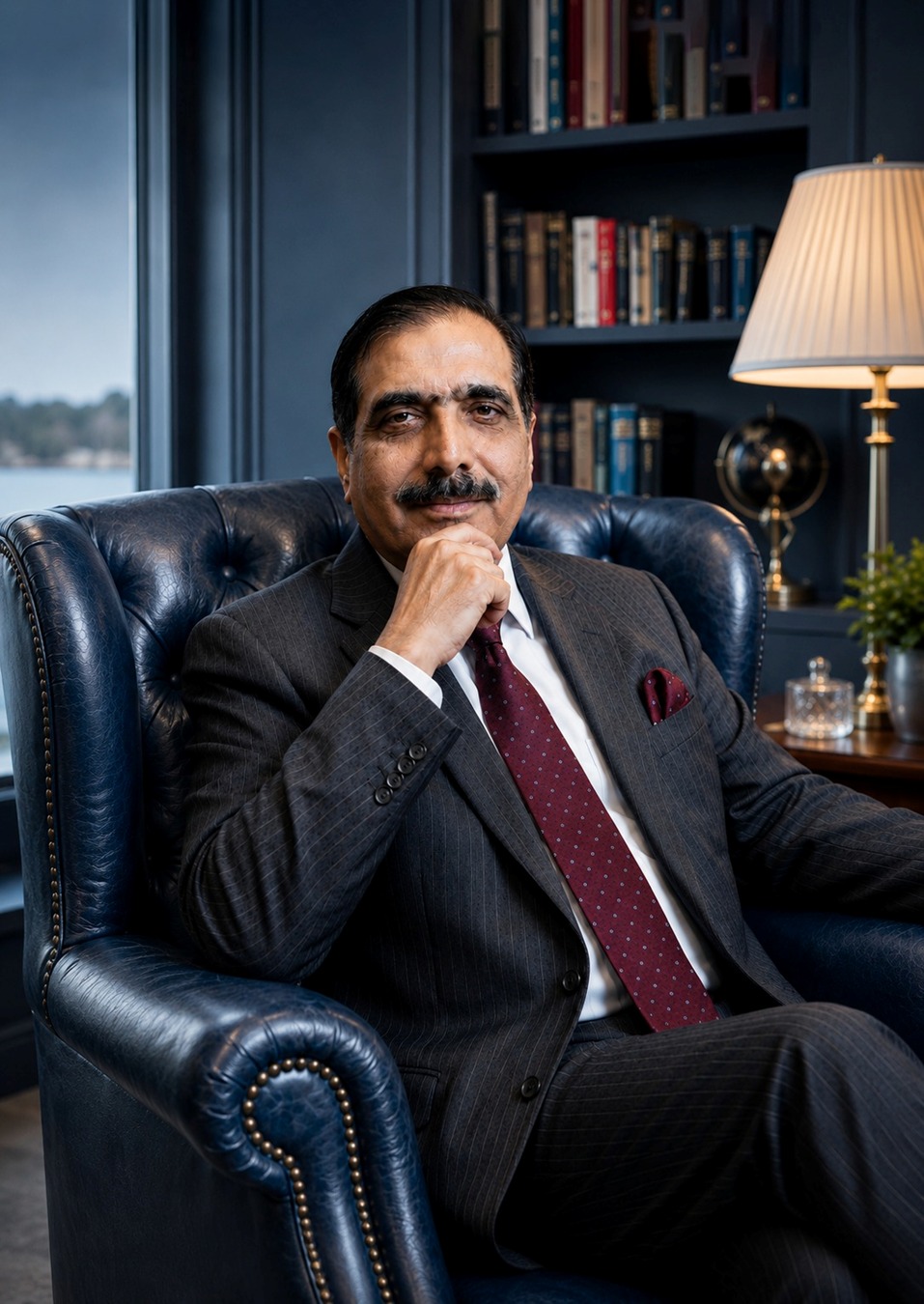
For more than three decades, Syed Azhar Husnain Abidi has been a steady, influential voice in the world of international education—an advisor, analyst, and counsellor whose work has shaped student mobility and Transnational Education (TNE) across Pakistan, the Gulf, and the wider Middle East. Today, as the United Arab Emirates stands at a pivotal moment in its evolution as a global education hub, Abidi’s insights carry renewed urgency.
Speaking with the clarity of someone who has witnessed the sector’s cycles of growth, disruption, and reinvention, Abidi reflects on the UAE’s remarkable rise as a centre for international education—and the challenges now demanding bold, strategic reform.
A Region Transformed by Global Education
Over the past two decades, the Gulf region—particularly the UAE—has undergone a profound educational transformation. International branch campuses representing some of the world’s most prestigious universities have taken root in purpose‑built clusters such as Dubai International Academic City, reshaping the academic landscape and contributing to the country’s soft power, innovation agenda, and knowledge economy.
But as Syed Azhar Husnain Abidi emphasizes, the UAE’s contribution extends far beyond the visible presence of international campuses. “The country has become a global laboratory for diverse TNE models,” he explains, pointing to dual degrees, franchised programmes, articulation pathways, validation arrangements, and online or blended learning partnerships. These models have opened doors for thousands of students from the Gulf, South Asia, Africa, and expatriate communities who aspire to earn internationally recognized qualifications without the financial, visa, or social barriers of studying abroad.
In a region with a rapidly growing youth population—many of whom may not have the means to travel overseas—this access is not merely convenient. It is transformative. “TNE in the UAE has been a vehicle for social mobility, human capital development, and economic inclusion,” Abidi notes. “It has allowed students to dream bigger without leaving home.”
A Sector Tested by Global Uncertainty
Yet the momentum that once seemed unstoppable has not been immune to global turbulence. The events of 2026—marked by geopolitical tensions, security concerns, and operational disruptions—exposed vulnerabilities across the international education sector. Declining enrolments, rising operational costs, and intensifying competition from emerging destinations such as Central Asia and Southeast Asia have challenged the sustainability of international branch campuses and TNE partnerships.
Abidi is quick to contextualize this moment. “Periods of uncertainty are not new in global education,” he says. “What matters is how nations respond—with resilience, policy adaptation, and strategic reforms.”
In this regard, he credits the UAE government for its stability, foresight, and commitment to maintaining investor confidence. Despite global headwinds, the country has continued to prioritize educational continuity, regulatory support, and international engagement. “The worst phase appears to be behind us,” Abidi observes. “Now is the time to rebuild confidence, revitalize enrolment, and reposition the UAE as an even stronger global education destination.”
A Call for Recalibration, Not Retreat
For Abidi, the path forward is clear: the sector does not need to retreat—it needs to recalibrate. The UAE’s success in attracting international campuses was built on world‑class infrastructure, supportive regulation, international connectivity, and a long‑term vision to become a global education hub. But the model must evolve to meet new realities.
“The future of TNE in the UAE will depend on balancing affordability with quality, accessibility with excellence, and global ambition with regional relevance,” he says. Rising costs, shifting student expectations, and increased competition require institutions to rethink their value propositions. Students today are more discerning, more outcomes‑driven, and more sensitive to financial pressures.
Abidi argues that the UAE can strengthen its position by reducing financial barriers, expanding scholarships, simplifying visa systems, and enhancing employability pathways. “Education follows stability,” he says, “but it rewards adaptability, resilience, and innovation.”
Abidi argues that the UAE can strengthen its position by reducing financial barriers, expanding scholarships, simplifying visa systems, and enhancing employability pathways. “Education follows stability,” he says, “but it rewards adaptability, resilience, and innovation.”
The UAE at a Crossroads
The UAE now stands at a critical crossroads. The challenges are real—but so are the opportunities. Its strategic geographic location, advanced infrastructure, economic strength, and global outlook remain unmatched in the region. The question is not whether reform is needed, but how swiftly and strategically it can be implemented.
Abidi outlines several priorities for the next phase of growth:
- Revitalizing TNE partnerships to ensure they remain relevant, sustainable, and aligned with regional needs.
- Strengthening quality assurance to maintain international standards while supporting innovation.
- Enhancing employability pathways through industry partnerships, internships, and skills‑focused curricula.
- Expanding financial support mechanisms to make international education more accessible to a broader demographic.
- Leveraging technology to integrate online, blended, and hybrid learning models that increase flexibility and reach.
These measures, he believes, can help the UAE not only sustain enrolment but redefine itself as a more inclusive, competitive, and future‑ready global education destination.
A Veteran’s Perspective on the Road Ahead
With more than 30 years of experience advising students, institutions, and governments, Abidi brings a rare combination of historical perspective and forward‑looking insight. His professional operations across Pakistan and the Middle East have given him a deep understanding of student aspirations, institutional challenges, and regional dynamics.
He remains optimistic about the UAE’s trajectory. “This country has repeatedly shown that it can adapt, innovate, and lead,” he says. “The foundations are strong. What we need now is strategic renewal.”
For Syed Azhar Husnain Abidi, the evolution of TNE in the UAE is not just an educational issue—it is a national opportunity. By embracing reform, strengthening partnerships, and prioritizing student outcomes, the UAE can reinforce its position as one of the world’s most dynamic and resilient education hubs.
As the sector prepares for its next chapter, his message is clear: the future belongs to institutions—and nations—that anticipate change, embrace it, and lead with purpose.